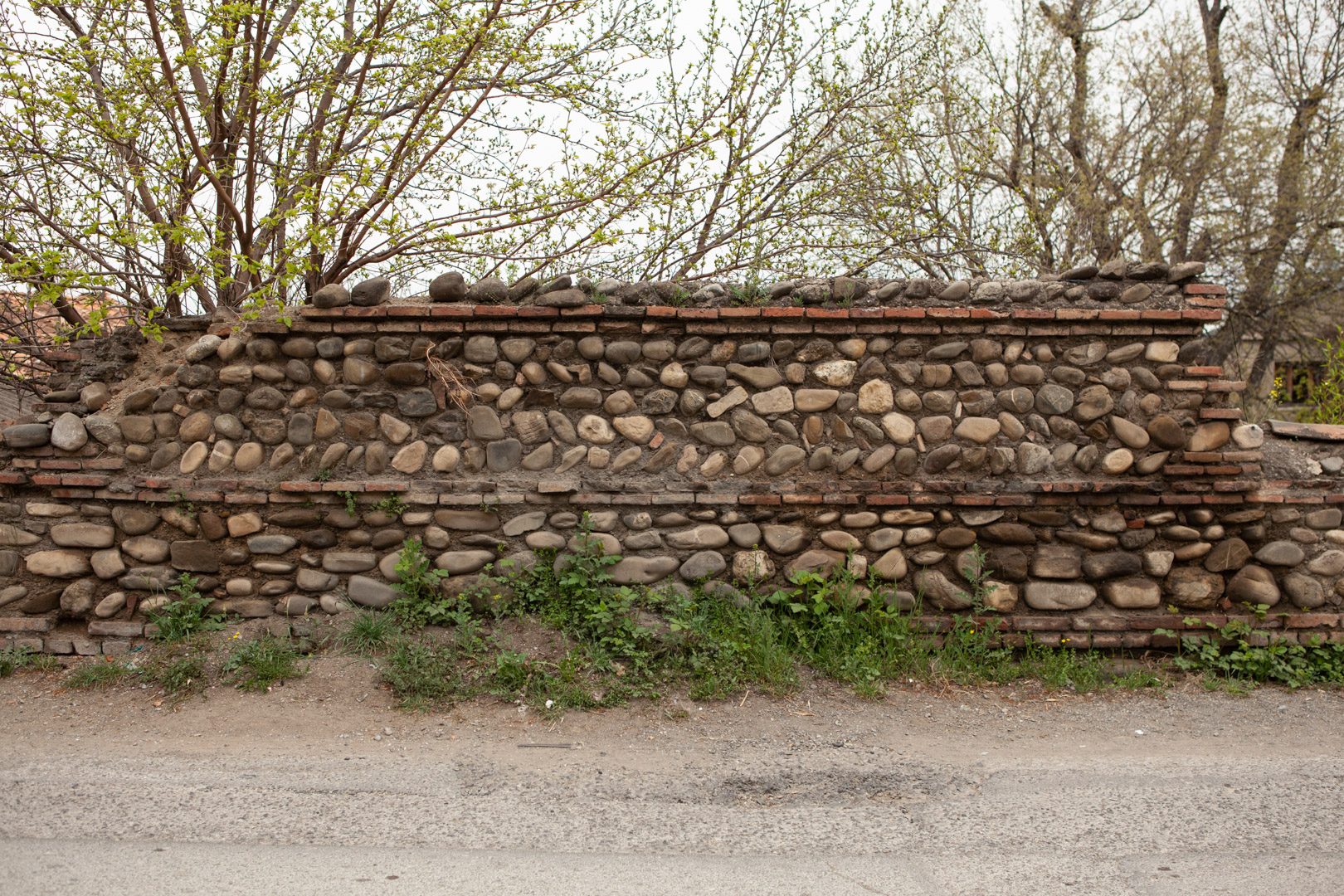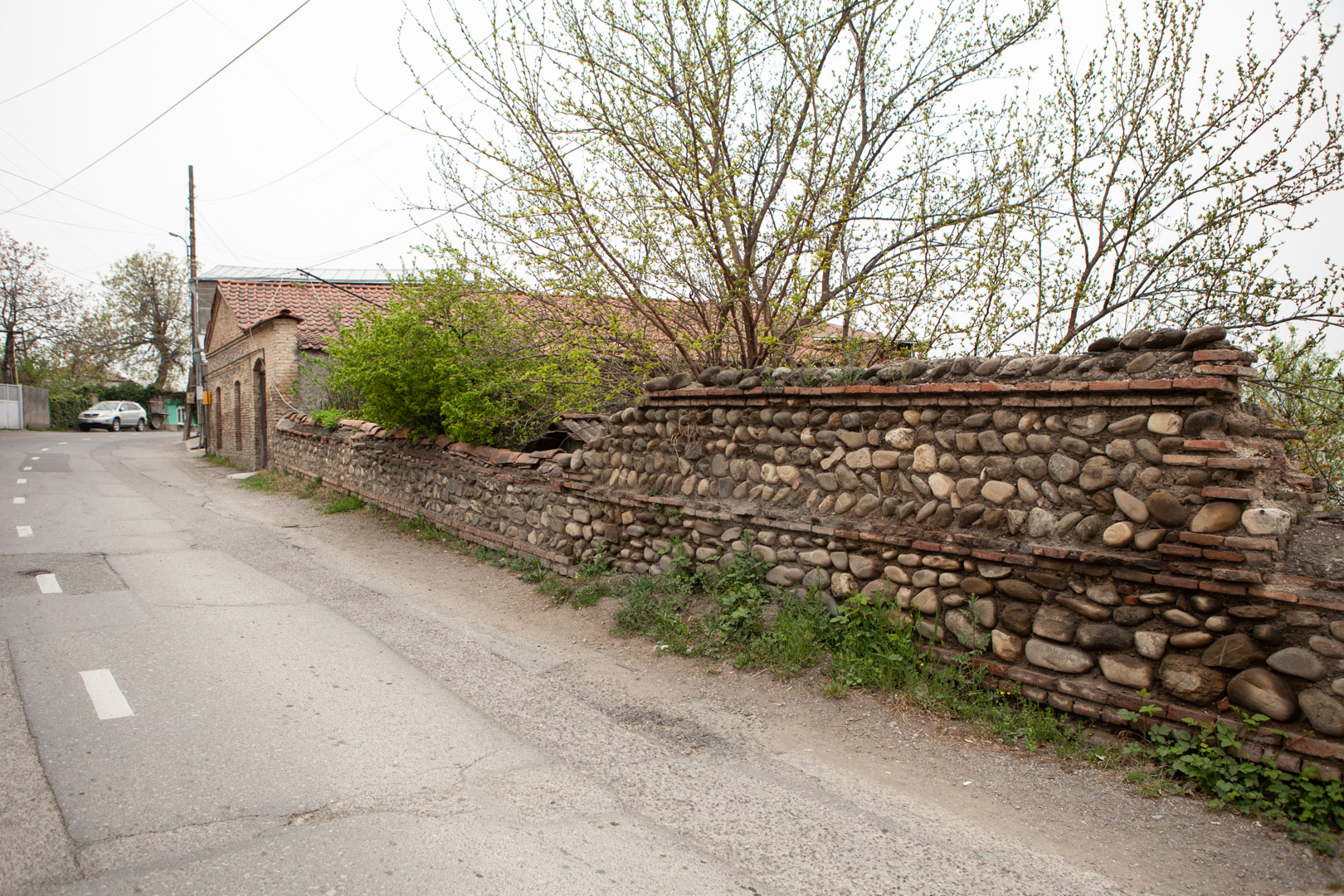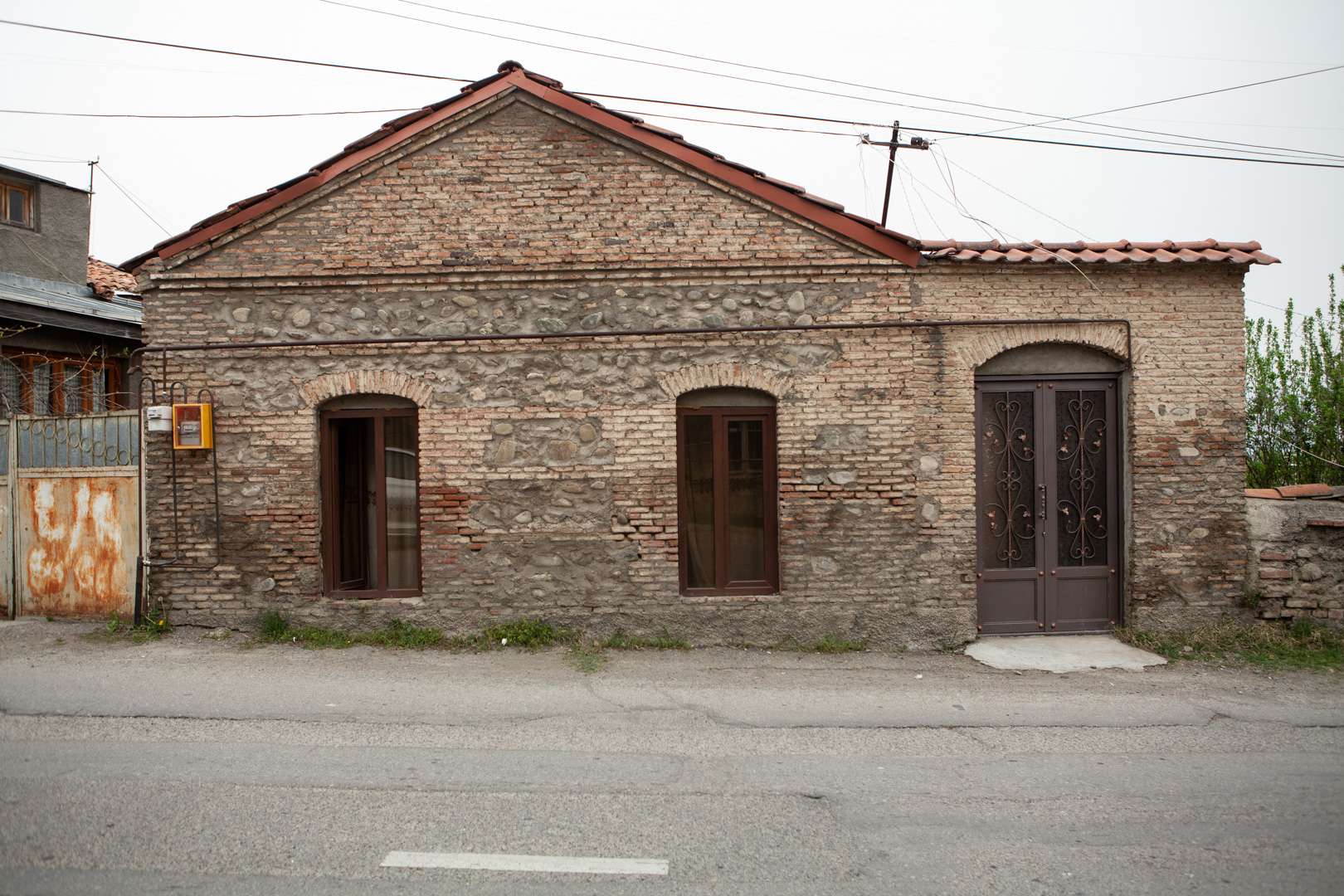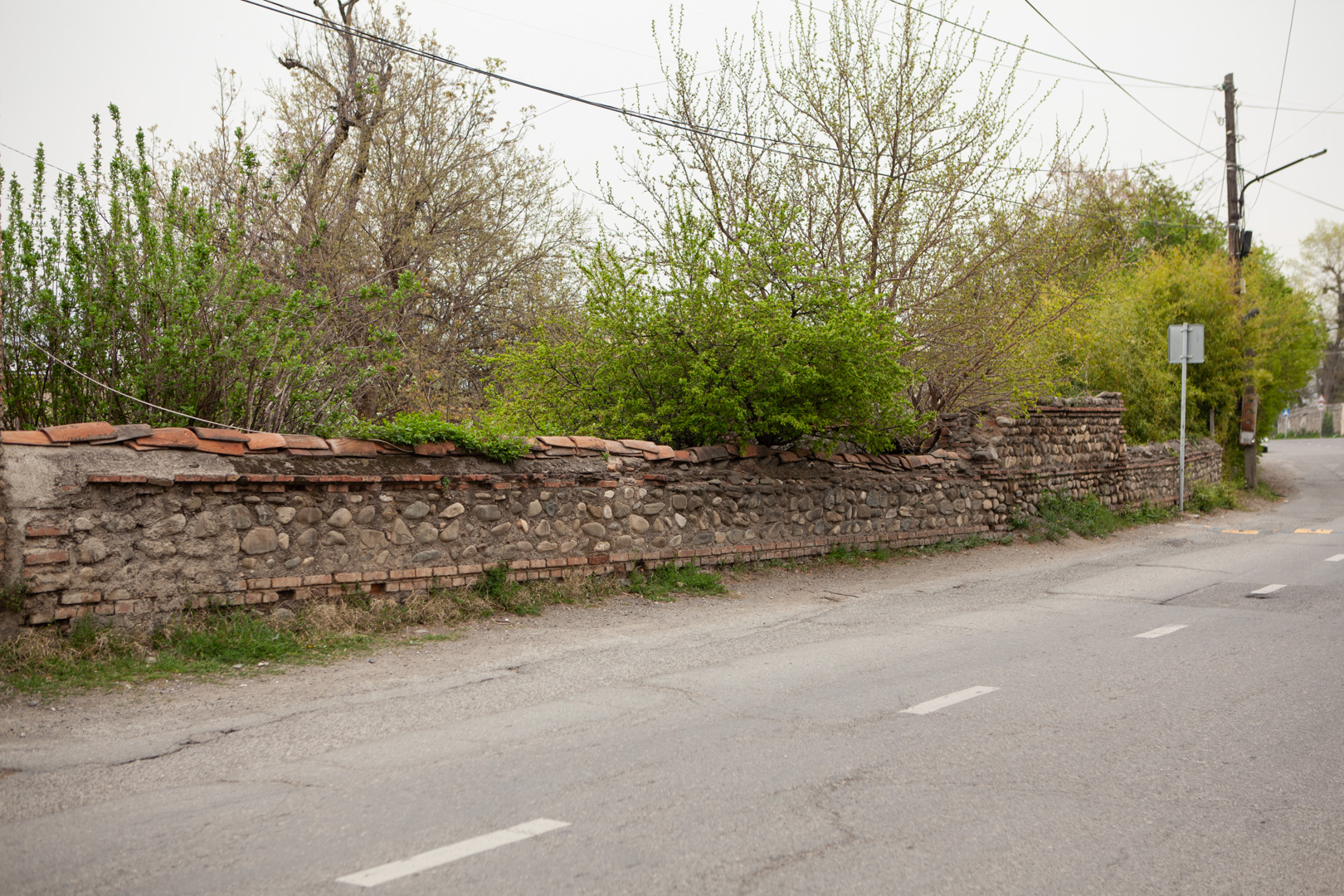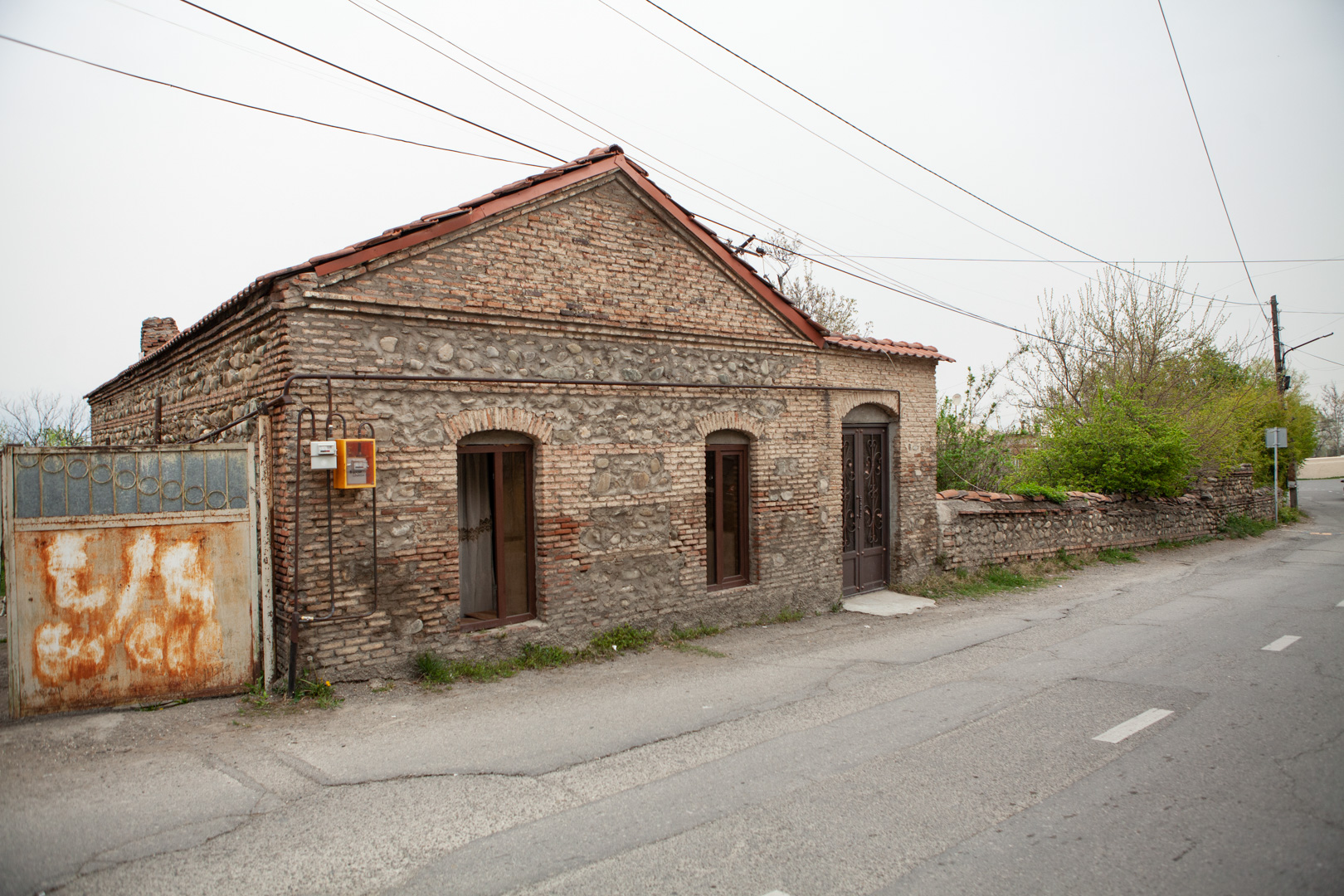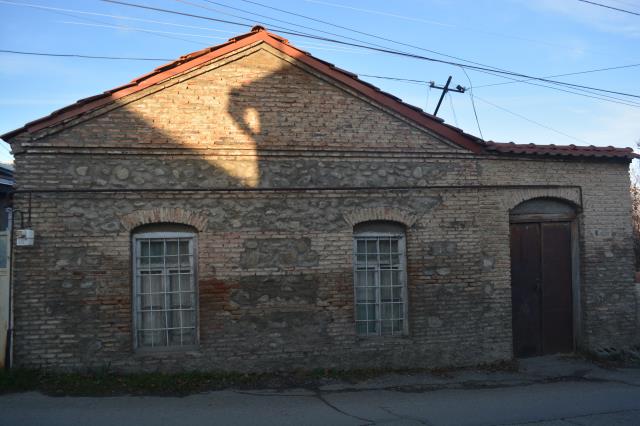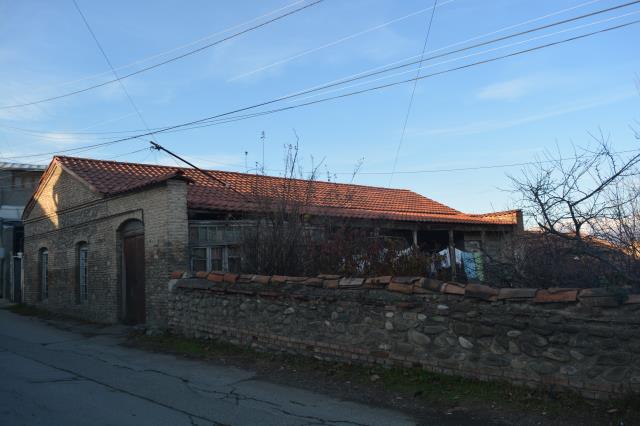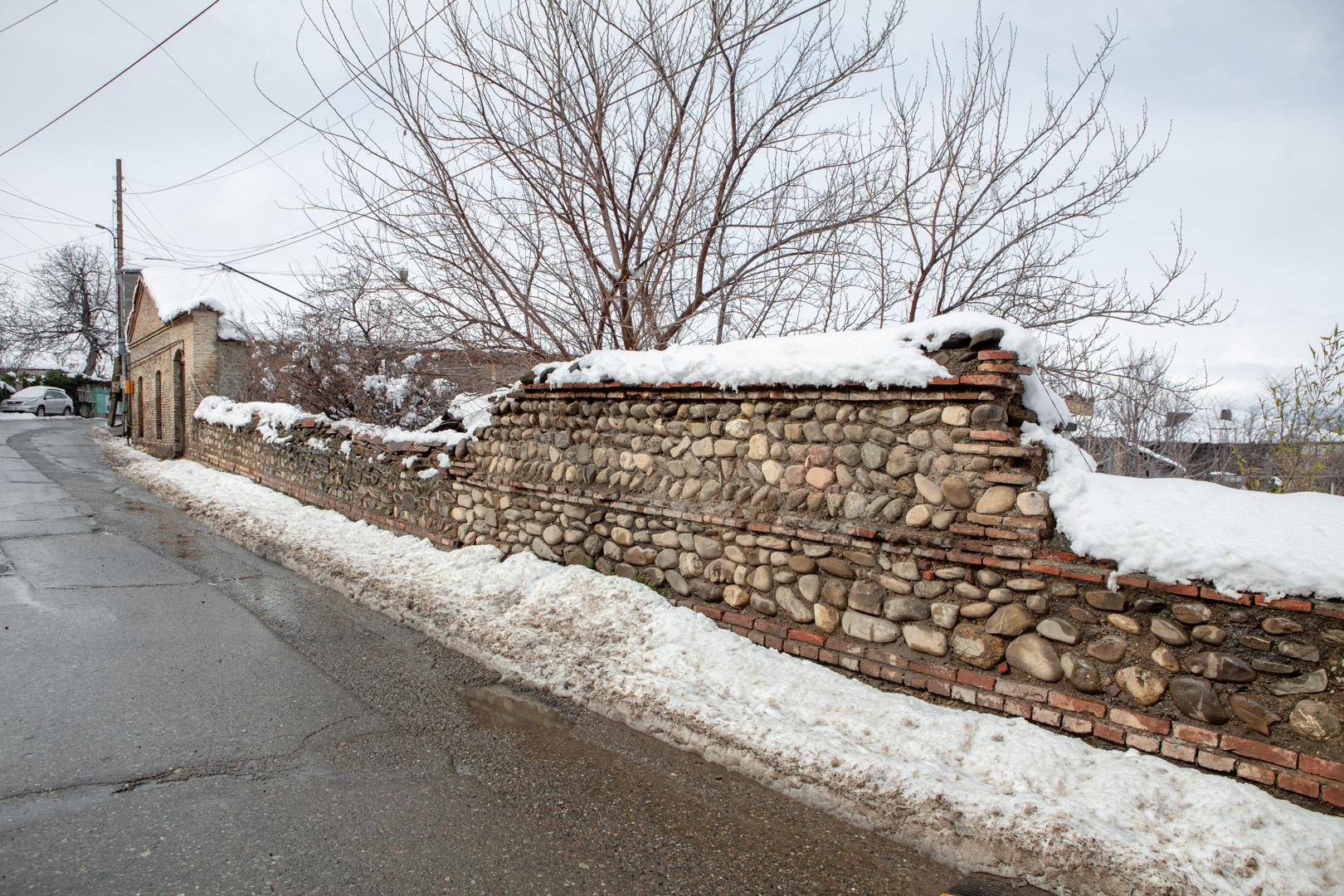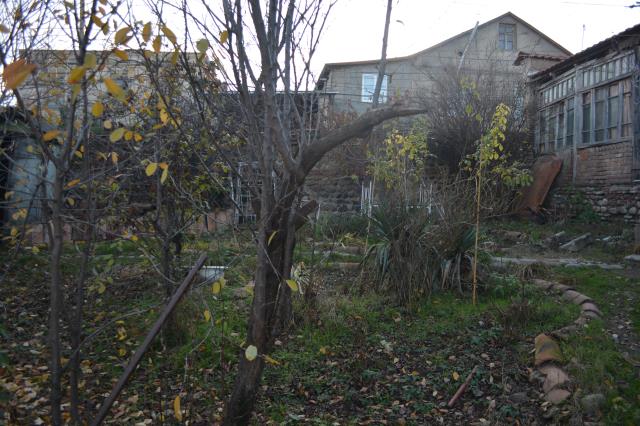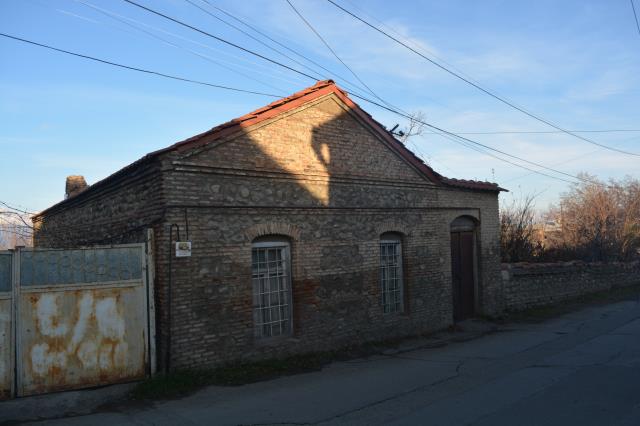
სამკუთხა ფორმის ფრონტონით დასრულებული ერთსართულიანი (ეზოს მხრიდან ორსართულიანი) საცხოვრებელი სახლი, რიყის ქვისა და აგურის მონაცვლეობით დეკორირებული ფასადით, მეცხრამეტე საუკუნის თელავის საცხოვრისის ტრადიციული საფასადე კომპოზიციით ხასიათდება – ორ თაღოვან სარკმელს შორის არსებული თავისუფალი სივრცე (ზოგ შემთხვევაში სარკმლისავე ფორმის ნიშა). შენობა მე-19 საუკუნის მეორე ნახევარშია აგებული. შუშაბანდის მხარეს არსებულ კედელზე შემორჩენილია ლურჯი ფერის ნალესობის კვალი, რაც თელავის სახლებზე გარე კედლის დაფერვის ტრადიციის გამოძახილია. საცხოვრებელი სახლი მნიშვნელოვანია სიძველითა და თელავური ურბანული არქიტექტურისათვის სახასიათო საფასადო კომპოზიციის გამო.
A one-storey (two-storey from the side of the courtyard) house with a triangular pediment, a facade of which is decorated with alternating cobblestones and bricks, is characterized by the traditional facade composition of a Telavi dwelling of the 19th century – free space between two arched windows (in some cases, a window niche). The building was built in the second half of the 19th century. On the wall from the side of the glass gallery traces of blue colour plastering are preserved, which is the echo of outer wall plating tradition on Telavi houses. The house is important for its antiquity and facade composition, typical to Telavi urban architecture.
ობიექტი