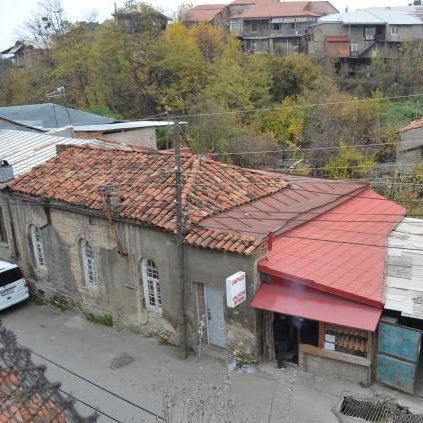
კახური სამშენებლო ტექნიკის მსგავსად რიყის ქვისა და ძველი ქართული აგურის კომბინაციით ნაგები ერთსართულიანი შენობა მოკრძალებული მასშტაბითა და ნახევარწრიული სარკმლებით დანაწევრებული ფასადით გამოირჩევა. სახლი მე-19 საუკუნის მეორე ნახევრით თარიღდება. შენობა მნიშვნელოვანია სიძველითა და თითქმის ხელუხლებელი, აუთენტური სახით დაცული ინტერიერით, სადაც შემორჩენილია კარ-ფანჯარა, ხის იატაკები, შელამფული ჭერი, სარდაფში კი თახჩები და კედლის ბუხარი.
Like the Kakheti building technique, the one-storey building, built from a combination of cobblestone and old Georgian brick, is distinguished by its modest scale and facade fagmented by a semi-circular windows. The house dates back to the second half of the 19th century. The building is important for its antiquity and almost untouched, authentic interior, where doors and windows, wooden floors, wooden ceiling, as well as closets and a wall fireplace in the basement have been preserved.